
A Beginner’s Guide to Event Lighting
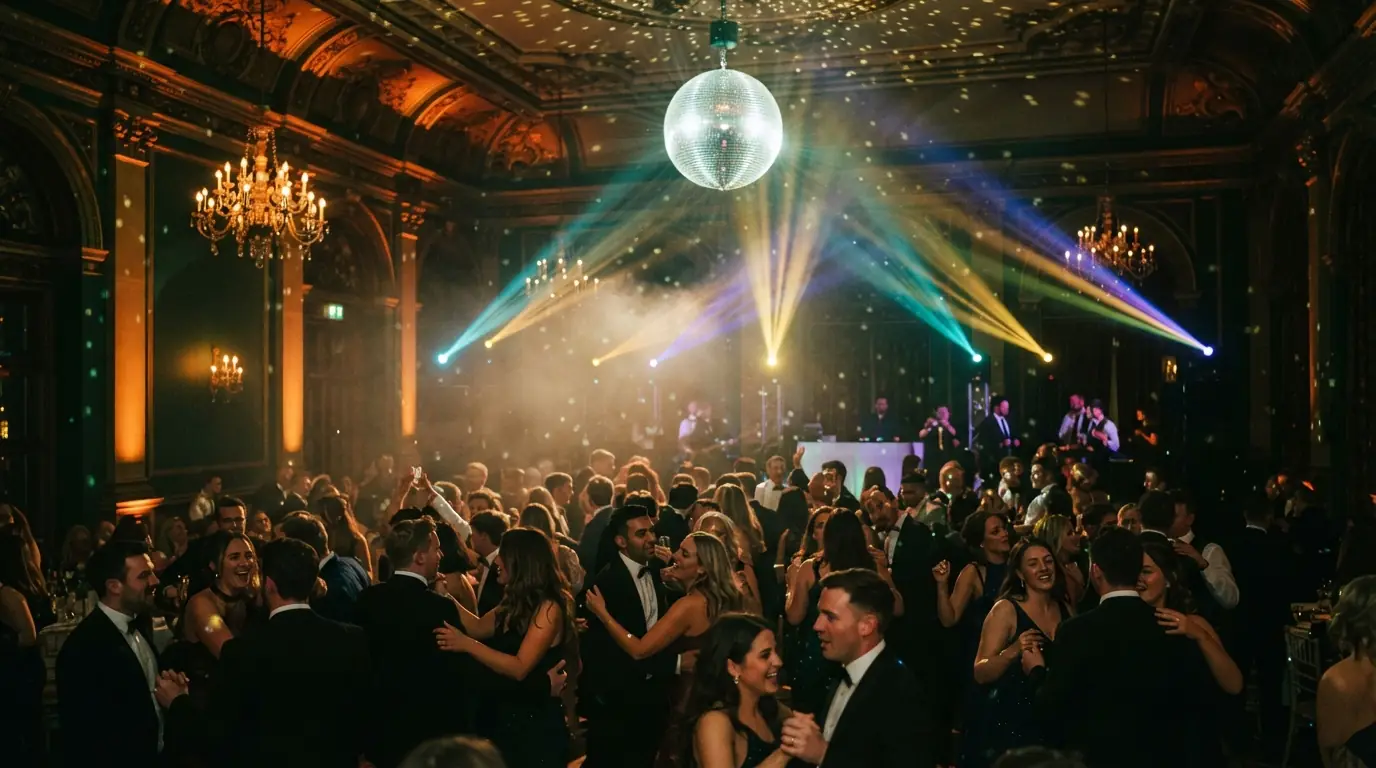
Think of your favourite concert without the lights. It wouldn’t be the same night. Lighting is the quickest way to change how a room feels, and it’s the upgrade most people forget to budget for. Here’s what the different types do, and how to choose.
The main types of event lighting
Uplighting
Small fixtures placed on the floor that wash the walls with colour. Uplighting is the backbone of most event designs: it makes a room feel warmer, hides tired décor and ties the space to your colour scheme. It’s included as standard with our 3-piece line-up.
Moving heads
The beams you see at gigs and festivals. They sweep, spin and pulse with the music, and they’re what make a dance floor feel like a proper party. Best saved for the evening, when the lights go down.
Pin spots and accent lighting
Tight beams that pick out a single detail: the cake, the centrepieces, the top table. They draw the eye to the things you’ve spent time choosing.
Decorative lighting
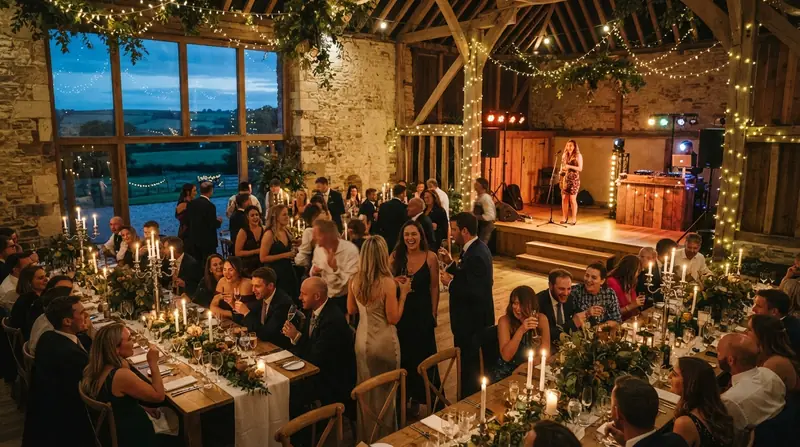
Festoon lights, fairy lights, candles and neon signs. These add personality and look wonderful in photos, especially at outdoor and marquee events.
Haze
A light, almost invisible mist that makes beams of light visible in the air. A little haze turns moving heads from nice into spectacular. Always check your venue’s rules first, as some don’t allow it.
What different colours do to a room
Colour sets the mood before anyone has heard a note.
- Warm amber and gold: romantic, flattering and elegant. A favourite for weddings and dinners.
- Deep green: luxurious and calming, beautiful in country houses and garden venues.
- Blues and whites: clean and modern, ideal for corporate events and product launches.
- Purples and magentas: rich and dramatic, great for late-night parties.
- Reds: energetic and bold. Use in moderation on the dance floor for a burst of excitement.
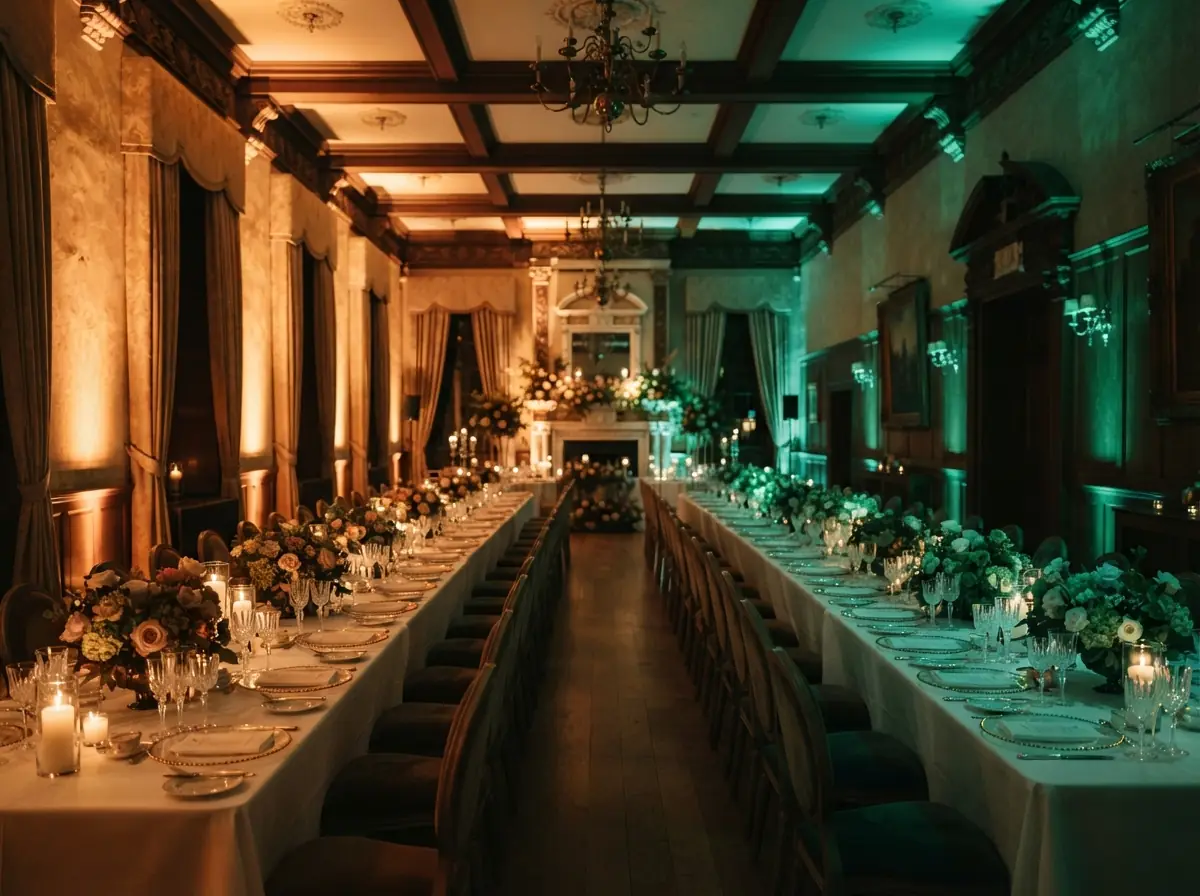
Change the lighting as the night changes
The best lighting plans evolve with the event. A typical wedding might move from soft, warm uplighting during dinner to deeper colours as the speeches finish, then into moving heads and pulsing colour once the dance floor opens. Our team adjusts the lighting live alongside the music, so the room always matches the mood.
Common lighting mistakes to avoid
- Too bright during dinner. Full house lights kill atmosphere. Ask the venue to dim them.
- Too dark for photos. Your photographer needs some light to work with, especially for the first dance.
- Colours that clash with your theme. Share your colour scheme early so the lighting complements it.
- Forgetting the venue’s rules. Haze, power supply and fixings vary from venue to venue, so check in advance.
Want to take it up a level?
Uplighting comes with every BeatPlayLive booking. If you’d like moving heads, extra wash lighting or a fuller production, add lighting as an extra and we’ll design it around your venue. Pair it with our guide to festival-style events for even more ideas.
Frequently asked questions
Is uplighting included with BeatPlayLive?
Yes. Uplighting is part of every package, along with a professional sound system. Additional lighting can be added as an extra.
Will lighting work in a venue with low ceilings?
Yes, with the right fixtures. Compact moving heads and uplighting work well in most spaces. Tell us about your venue and we’ll recommend what suits it.
Do we need haze for the lights to look good?
Not at all. Haze makes beams more visible, but uplighting and colour washes look great without it. Many venues don’t permit haze, so we’ll always check first.